
Fried Chicken Internal Temp
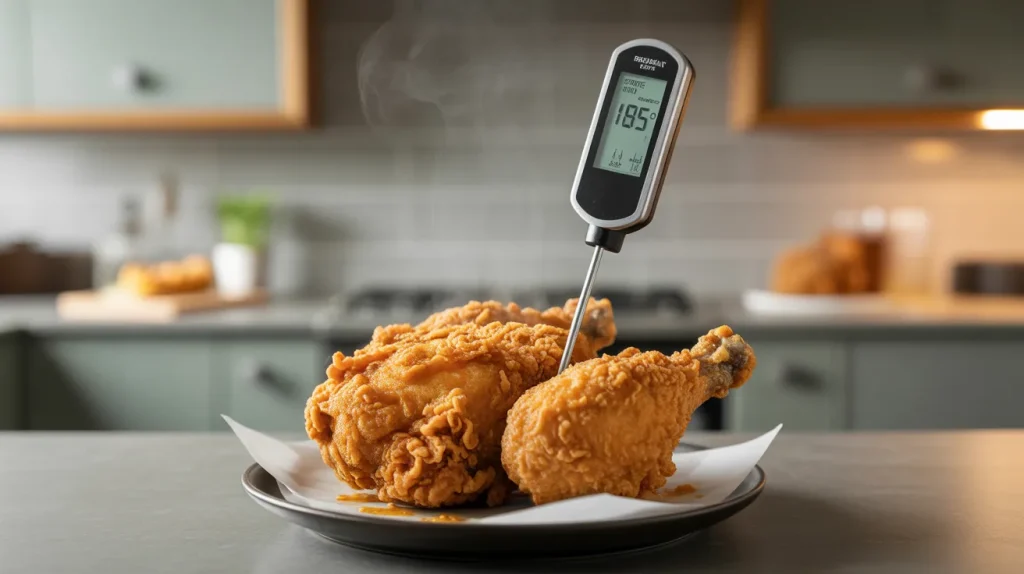
Knowing the correct fried chicken internal temp is critical for both safety and texture. Undercooked chicken can be unsafe, while overcooked chicken becomes dry and tough.
This guide explains the exact safe temperature, how to check it properly, carryover cooking, and how temperature affects juiciness.
What Is the Safe Internal Temperature for Fried Chicken?
The USDA safe minimum internal temperature for chicken is:
165°F (74°C)
This applies to:
- Drumsticks
- Thighs
- Breasts
- Wings
- Tenders
The thickest part of the meat must reach 165°F.
Why Internal Temperature Matters
Cooking to the correct temperature ensures:
- Harmful bacteria are eliminated
- Chicken stays juicy
- Meat is fully cooked without being dry
Relying only on color is not accurate.
How to Check Fried Chicken Internal Temp
Use a digital instant-read thermometer.
Steps:
- Insert thermometer into the thickest part of the meat
- Avoid touching bone
- Wait 2–3 seconds for reading
- Confirm 165°F or higher
Bone contact can give false readings.
Ideal Target for Best Texture
Although 165°F is the minimum safe temperature:
- Many cooks remove chicken at 165–170°F
- Dark meat (thighs, drumsticks) can go to 175–180°F for better tenderness
Dark meat tolerates slightly higher temps better than breast meat.
Internal Temperature by Chicken Cut
| Cut | Safe Minimum Temp | Ideal Texture Range |
|---|---|---|
| Breast | 165°F | 165–170°F |
| Thigh | 165°F | 170–180°F |
| Drumstick | 165°F | 170–180°F |
| Wing | 165°F | 165–175°F |
| Tender | 165°F | 165–170°F |
Dark meat benefits from slightly higher finishing temperature.
How Long to Fry Chicken to Reach 165°F
Cooking time depends on:
- Oil temperature
- Piece size
- Bone-in vs boneless
General deep-frying times at 325–350°F:
| Cut | Fry Time |
|---|---|
| Wings | 8–10 minutes |
| Drumsticks | 12–15 minutes |
| Thighs | 14–16 minutes |
| Breasts | 16–18 minutes |
Always confirm with thermometer — time alone isn’t enough.
See How Long to Fry Chicken for full timing breakdown.
Carryover Cooking Explained
After removing chicken from oil:
- Internal temp can rise 3–5°F while resting
- Let rest 5–10 minutes
This helps redistribute juices and finish cooking safely.
Why Chicken May Be Undercooked Inside
Common causes:
• Oil too hot (outside browns too fast)
• Pieces too large
• Crowding the pan
• Skipping thermometer check
If crust browns before reaching 165°F:
- Lower oil temperature slightly
- Finish in oven at 350°F
Internal Temp for Air Fryer Fried Chicken
Air fryer temperatures vary.
Typical cook settings:
- 375°F for 20–25 minutes (drumsticks)
- Flip halfway
Always verify internal temperature reaches 165°F.
See Air Fryer Fried Chicken for full method.
What Happens If You Overcook Chicken?
Internal temperature above:
- 185°F+ may dry breast meat
- 190°F+ can cause stringy texture
Dark meat tolerates higher temperatures better.
Proper balance preserves moisture.
Does Internal Temp Affect Calories?
No.
Internal temperature ensures safe cooking but does not change calorie count.
Calories depend on:
- Portion size
- Breading
- Oil absorption
See Fried Chicken Calories Per Piece for details.
Frequently Asked Questions
165°F (74°C) is the minimum safe internal temperature for all chicken.
For breast meat, 170°F is near the upper ideal range. For thighs and drumsticks, 170–180°F improves tenderness.
Color and juices are unreliable. A thermometer is the most accurate method.
Yes. If crust is browned but inside is undercooked, bake at 350°F until internal temp reaches 165°F.
Yes. Internal temperature can rise slightly after removal from heat.
Final Thoughts
Monitoring fried chicken internal temp ensures both safety and ideal texture.
Key takeaways:
- 165°F minimum
- Dark meat can go slightly higher
- Always use a thermometer
- Rest before serving
Temperature control is just as important as seasoning and oil choice.