
Best Oil for Fried Chicken
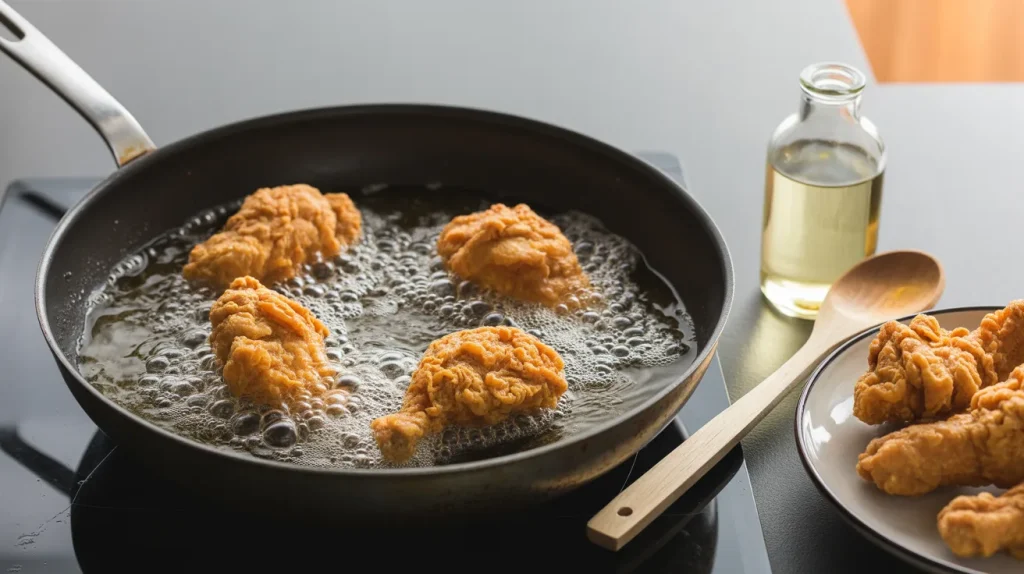
Choosing the best oil for fried chicken directly affects crispiness, flavor, and texture. The wrong oil can burn quickly, create off-flavors, or leave the chicken greasy. The right oil handles high heat, stays neutral in taste, and produces a clean, golden crust.
This guide explains which oils work best, smoke points, flavor impact, and what to avoid.
What Makes an Oil Good for Frying Chicken?
Fried chicken cooks at 325°F–350°F. Your oil must handle that heat consistently.
Key factors:
- High smoke point
- Neutral flavor
- Stable under high heat
- Affordable for deep frying
Oil that breaks down too quickly leads to burnt coating and bitter taste.
Top Oils for Fried Chicken
1. Peanut Oil (Most Popular Choice)
Smoke Point: ~450°F
Why it works:
- Handles high heat well
- Neutral flavor
- Creates crispy texture
Peanut oil is widely used in commercial kitchens for fried chicken.
Best for: Traditional deep frying
2. Canola Oil (Budget-Friendly Option)
Smoke Point: ~400°F
Why it works:
- Affordable
- Neutral taste
- Easy to find
Canola oil performs well for home frying.
Best for: Large batches on a budget
3. Vegetable Oil (Common Household Option)
Smoke Point: ~400°F
Why it works:
- Neutral flavor
- Accessible
- Reliable frying performance
Most “vegetable oil” blends include soybean oil.
Best for: Everyday frying
4. Corn Oil
Smoke Point: ~450°F
Why it works:
- High smoke tolerance
- Mild taste
Less common but still effective.
Oils to Avoid for Fried Chicken
Olive Oil
- Lower smoke point
- Strong flavor
- Can burn quickly
Not ideal for deep frying.
Butter
- Very low smoke point
- Burns quickly
Better for finishing, not frying.
Unrefined Coconut Oil
- Strong flavor
- Can overpower seasoning
Refined coconut oil performs better, but still not common for fried chicken.
Smoke Point Comparison Chart
| Oil Type | Smoke Point | Flavor Impact | Recommended? |
|---|---|---|---|
| Peanut Oil | ~450°F | Neutral | Yes |
| Canola Oil | ~400°F | Neutral | Yes |
| Vegetable Oil | ~400°F | Neutral | Yes |
| Corn Oil | ~450°F | Mild | Yes |
| Olive Oil | ~375°F | Strong | No |
| Butter | ~300°F | Strong | No |
High smoke point equals better stability.
Does Oil Affect Crispiness?
Yes.
Oil temperature directly impacts crust texture.
If oil is too cold:
- Chicken absorbs more oil
- Coating becomes greasy
If oil is too hot:
- Coating burns
- Inside remains undercooked
Maintain 325°F–350°F consistently.
How Much Oil Do You Need?
For deep frying:
- Use enough oil to fully submerge chicken
- Usually 2–3 inches deep
For shallow frying:
- At least halfway up the chicken piece
Insufficient oil leads to uneven cooking.
Reusing Oil Safely
You can reuse frying oil if:
- It hasn’t burned
- It’s strained after cooling
- Stored in airtight container
Discard oil if:
- It smells rancid
- It foams excessively
- It darkens significantly
Oil quality affects flavor.
Best Oil for Air Fryer Fried Chicken
Air fryers require:
- Light spray oil only
- Neutral cooking spray
Full oil immersion is not needed.
See Air Fryer Fried Chicken for full method.
Oil Temperature Control Tips
Use:
- Frying thermometer
- Heavy-bottomed pot
- Small batches
Avoid overcrowding — it lowers oil temperature.
Calories & Oil Absorption
Oil choice doesn’t drastically change calories.
However:
- Poor temperature control increases oil absorption
- Proper frying seals crust quickly
For nutrition details, see:
Frequently Asked Questions
Peanut oil is widely considered the best due to its high smoke point and neutral flavor.
Yes. Vegetable oil works well and is commonly used in home kitchens.
Yes. It has a suitable smoke point and neutral taste.
Strong-flavored oils can slightly alter taste. Neutral oils keep seasoning balanced.
Use a thermometer and avoid overcrowding the pan.
Final Thoughts
The best oil for fried chicken is one that handles high heat, stays neutral, and maintains consistent temperature.
For most home cooks:
- Peanut oil is ideal
- Canola oil is practical
- Vegetable oil is reliable
Proper temperature control matters more than oil brand.