
Fried Chicken Calories Per Piece
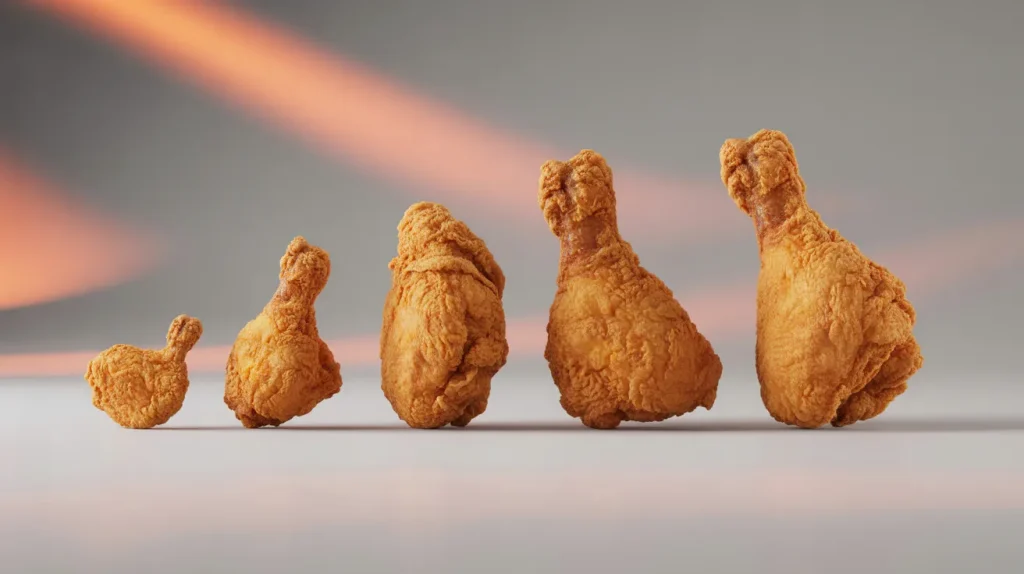
Fried chicken calories per piece vary depending on the cut, breading thickness, oil absorption, and cooking method. A single drumstick contains far fewer calories than a breast, while thighs and wings fall somewhere in between.
This guide breaks down calorie estimates by individual piece so you can better understand portion impact.
Calories in Each Fried Chicken Piece
Here’s a realistic estimate for restaurant-style fried chicken.
| Chicken Piece | Approx Calories | Portion Size |
|---|---|---|
| Drumstick | 130–180 | 1 piece |
| Thigh | 220–300 | 1 piece |
| Breast | 350–420 | 1 piece |
| Wing | 90–150 | 1 piece |
Actual calories vary by restaurant and preparation method.
Drumstick Calories
Drumsticks are one of the lower-calorie options because they are smaller cuts of dark meat.
Typical range:
- 130–180 calories
- 12–15g protein
- Moderate fat content
For detailed breakdown, see 1 Drumstick Calories.
Thigh Calories
Thighs contain more fat than drumsticks, which increases calorie count.
Typical range:
- 220–300 calories
- 18–22g protein
- Higher fat than white meat
Thighs are popular in family bundles due to flavor and size.
Breast Calories
Breasts are the largest piece and contain the highest calories per serving.
Typical range:
- 350–420 calories
- 30–40g protein
- Higher sodium depending on seasoning
Even though they’re higher in calories, they also contain the most protein per piece.
Wing Calories
Wings are the smallest portion.
Typical range:
- 90–150 calories
- 7–10g protein
Because of their size, multiple wings are usually eaten per serving.
How Breading Affects Calories
Chicken itself contains no carbohydrates.
Calories increase due to:
- Flour coating
- Batter layers
- Oil absorption during frying
Thicker crust = higher calories.
Double-breaded pieces often contain significantly more fat and carbs.
Oil Absorption & Frying Temperature
Oil temperature plays a role in calorie density.
- Proper frying temperature reduces excess oil absorption
- Lower oil temperature may increase retained oil
- Reheated oil can alter texture and fat levels
Air-fried or oven-fried versions may contain fewer added calories.
Calories by 2-Piece Combinations
Most restaurant meals include two pieces. Here are typical estimates:
| Combination | Approx Calories |
|---|---|
| 2 Drumsticks | 260–360 |
| Drumstick + Thigh | 350–450 |
| Thigh + Breast | 570–700 |
| 2 Breasts | 700–840 |
Sides can double these totals.
For full breakdown, see 2 Piece Fried Chicken Calories.
Fried Chicken Calories vs Grilled Chicken
Grilled chicken typically contains:
- Lower fat
- Fewer calories
- No breading
Fried chicken contains:
- Added fat from oil
- Carbs from coating
However, portion size still plays the biggest role.
Portion Size & Total Meal Impact
A 3-piece meal with sides may include:
- 600–1,000 calories from chicken alone
- 500–1,200 additional calories from sides
Understanding calories per piece helps estimate total intake more accurately.
Restaurant vs Homemade Calories
Restaurant fried chicken often contains:
- More sodium
- Consistent heavy breading
- Standardized frying process
Homemade versions vary depending on:
- Oil type
- Batter thickness
- Cooking method
Nutrition values can differ significantly.
For broader analysis, see Fried Chicken Nutrition Facts.
Frequently Asked Questions
Calories range from 90 to 420 per piece depending on the cut.
Wings and drumsticks typically contain fewer calories due to smaller size.
Yes. Breasts are larger and contain more calories but also more protein.
Yes. Removing the breaded skin reduces both fat and calorie content.
Two pieces usually range from 260 to 840 calories depending on the combination.
Final Thoughts on Fried Chicken Calories Per Piece
Calories per piece vary widely depending on:
- Cut selection
- Breading thickness
- Frying method
- Portion size
Understanding individual piece calories makes it easier to estimate total meal impact before ordering.
Nutrition values are estimates and may vary by restaurant and preparation style.