
Korean Fried Chicken (Complete Guide 2026)
Korean fried chicken has grown from a local comfort food into a global obsession. People who try it for the first time often notice one thing immediately: the crunch is different. It is lighter, sharper, and somehow stays crispy even after being coated in sauce. Beyond texture, the flavor balance sets it apart—sweet, savory, spicy, and garlicky notes working together without overpowering the chicken itself.
This dish is not just about frying chicken. It reflects a cooking philosophy that values patience, technique, and contrast. Whether served plain and crunchy or glazed in a sticky sauce, Korean fried chicken delivers an eating experience that feels both indulgent and refined. That is why it continues to win fans across different cultures and food traditions.
What Makes Korean Fried Chicken Different
The biggest difference between Korean fried chicken and other fried chicken styles lies in technique. Instead of relying on a thick, heavy coating, Korean-style fried chicken uses a very light batter. This allows moisture inside the chicken to escape during frying, which is key to achieving a dry, crackly crust.
Another defining feature is double frying. The chicken is fried once at a lower temperature to cook it through, then rested, and fried again at a higher temperature. This second fry removes excess moisture from the crust, locking in that signature crispiness.
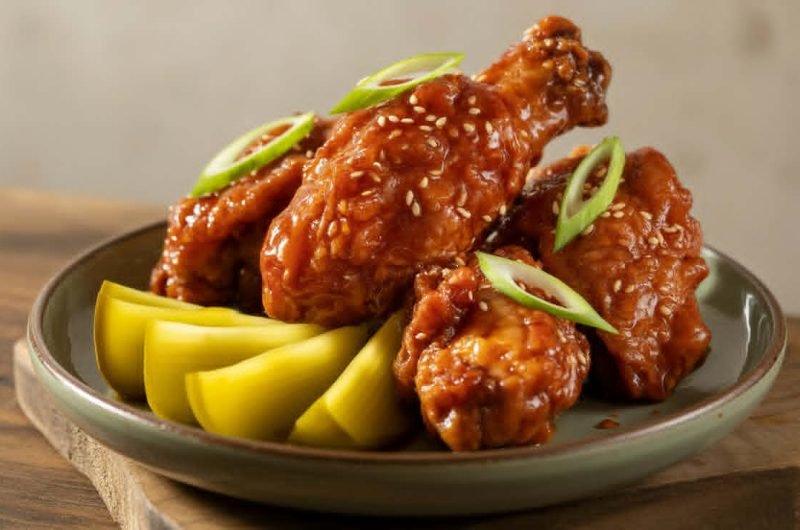
Flavor balance is equally important. Korean fried chicken is designed to taste good on its own, even before sauce. When sauce is added, it coats the chicken rather than soaking into it. The result is a glossy glaze sitting on top of a crunchy surface, not a soggy one.
History & Popularity of Korean Fried Chicken
Fried chicken existed in Korea long before it became trendy, but its modern form started gaining attention in the late twentieth century. As cooking oils became more accessible and frying techniques improved, cooks began experimenting with lighter coatings and multiple frying stages.
Over time, fried chicken became a popular social food. It was easy to share, paired well with cold drinks, and suited late-night gatherings. This culture helped refine the dish, pushing cooks to focus on texture and bold yet balanced sauces.
As Korean food gained international visibility, Korean fried chicken followed. Its visual appeal, crunch, and unique sauces made it easy to love, even for people unfamiliar with Korean cuisine. Today, it is recognized as a distinct category of fried chicken rather than just a regional variation.
Ingredients Used in Korean Fried Chicken
Course: Fried Chicken Recipes4
servings30
minutes40
minutes300
kcalKorean fried chicken relies on simple ingredients, but each plays a specific role.
Ingredients
Chicken cuts are usually smaller pieces like wings, drumettes, or bite-sized chunks. Smaller cuts fry more evenly and provide more surface area for crispiness and sauce.
The batter or coating is light and airy. It often uses starch-based ingredients rather than heavy flour mixtures. This helps create a thin shell that crisps quickly and stays dry.
Seasoning is kept minimal at first. Salt, mild aromatics, and sometimes a touch of ginger are used to enhance the chicken’s natural flavor without dominating it.
Sauces are where personality comes in. Sweeteners, fermented elements, chili heat, and garlic are combined to create sauces that cling to the crust without softening it.
How Korean Fried Chicken Is Made
- Marination
The process starts with seasoning the chicken itself. This step is not about heavy flavoring but about removing raw odors and lightly seasoning the meat. A short rest allows the seasoning to penetrate while keeping the texture firm. - Light Coating
Instead of thick dredging, the chicken is coated lightly. The goal is to create a thin layer that crisps instantly when it hits hot oil. Too much coating would trap moisture and ruin the final texture. - Double Frying
The first fry cooks the chicken gently. After resting, the second fry is hotter and shorter. This stage is where the magic happens. Steam escapes, bubbles form on the surface, and the crust becomes rigid and crackly. - Sauce Tossing
Once fried, the chicken can be served plain or tossed in sauce. The sauce is usually warm and thick enough to coat the chicken lightly. Timing matters here—tossing too early or with overly thin sauce can soften the crust.
Popular Korean Fried Chicken Sauces
Soy garlic sauce is rich and savory with a subtle sweetness. Garlic adds depth without overpowering the chicken, making it a favorite for those who prefer mild heat.
Sweet chili-style sauce leans toward balance. It combines sweetness with gentle spice, coating the chicken in a glossy layer that highlights crunch and aroma.
Spicy gochujang-style sauce brings deeper heat and complexity. It is bold, slightly tangy, and layered, offering a slow-building spice rather than an aggressive burn.
Each sauce is designed to complement the fried chicken, not mask it.
Taste, Texture & Eating Experience
The first bite of crispy Korean fried chicken is usually followed by a pause. The crunch is audible, almost brittle, before giving way to juicy meat. When sauce is involved, it adds shine and flavor without soaking through.
Aroma plays a big role as well. Fried notes, garlic, and subtle sweetness rise together, making the dish hard to resist. What keeps people coming back is balance. Even spicy versions feel controlled, allowing you to enjoy multiple pieces without fatigue.
How Korean Fried Chicken Is Served
Korean fried chicken is rarely served alone. Pickled radish is a classic companion, cutting through oiliness with freshness and acidity. Fries or simple salads sometimes appear alongside, but rice is also common for those who want a fuller meal.
Serving is usually casual and communal. The chicken is piled high, meant to be shared, eaten with hands, and enjoyed slowly.
Tips for Making Korean Fried Chicken at Home
FAQs
Not always. Many versions are mild or only slightly spicy. Heat level depends on the sauce choice.
The double-frying process removes moisture from the crust, which helps it stay crisp even after cooling.
Yes, but dry heat works best. An oven or air fryer restores some crispiness better than a microwave.
Soy garlic is a good starting point. It highlights flavor without strong heat.
Conclusion
Korean fried chicken stands out because it respects technique as much as flavor. The light coating, double frying, and carefully balanced sauces create a dish that feels indulgent without being heavy. It is crunchy yet juicy, bold yet controlled.
For anyone who enjoys fried chicken but wants something different, Korean fried chicken offers a fresh perspective. It is approachable, satisfying, and memorable—one of those foods that explains its popularity with the very first bite.